Entity optimization: how AI recognizes your brand

What are entities and why are they crucial for AI?
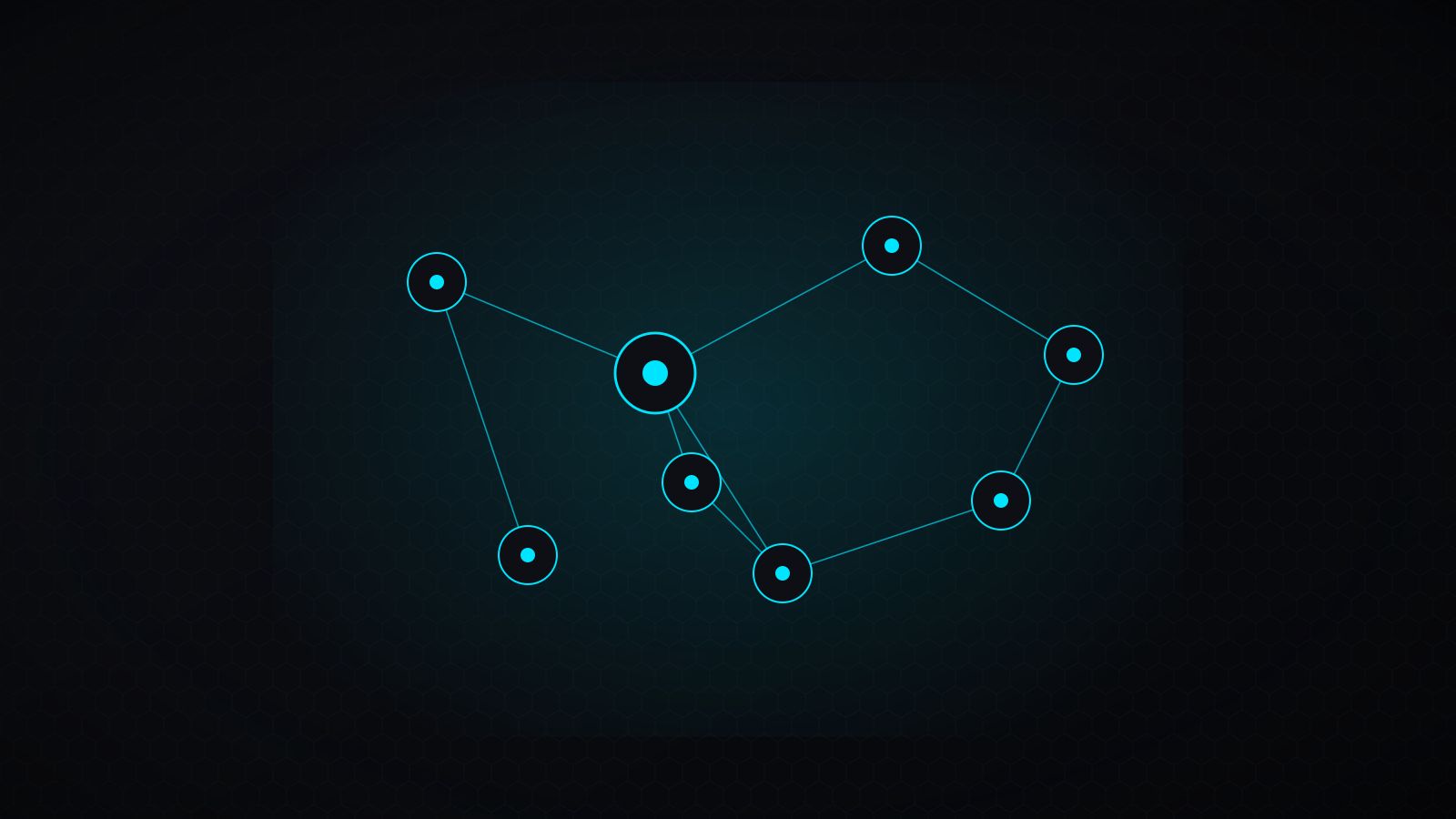
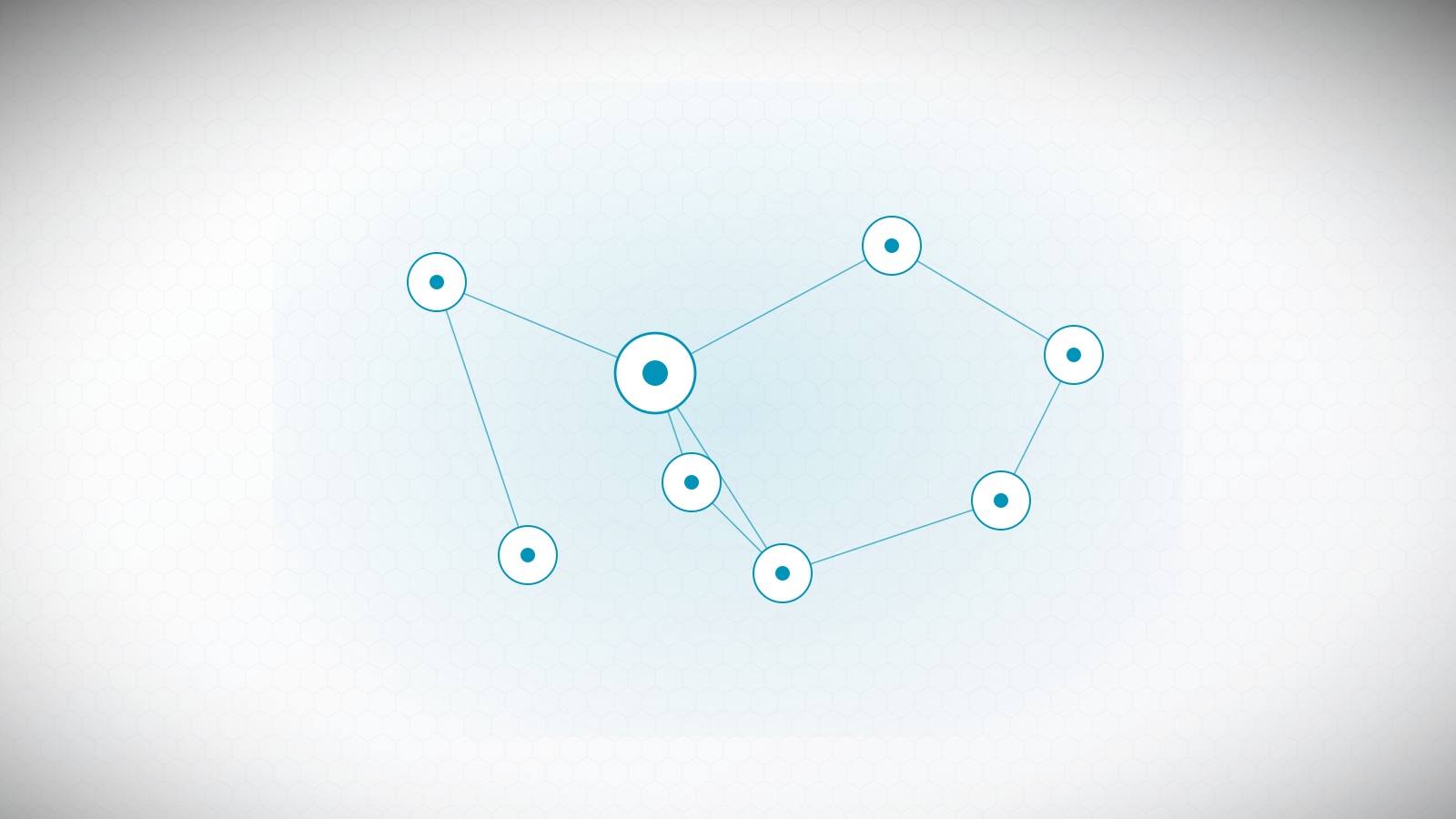
An entity in the context of AI and search engines is a unique, distinguishable concept in the real world. It can be a person, an organization, a product, a location or an abstract concept. Google's Knowledge Graph — bibliotheekterm contains billions of entities and their interrelationships. AI models like ChatGPT, Perplexity and Gemini use similar knowledge graphs to understand the world.
When your brand is a recognizable entity in these knowledge graphs, everything changes. AI models can then link your brand to specific expertise, products, locations and relationships. Instead of being merely one of many websites about a topic, you become a recognizable reference point. This increases the likelihood that AI models cite you when users ask questions related to your area of expertise.
The concept of entities goes beyond simple name recognition. An AI model that recognizes your brand as an entity also understands the context: what industry you operate in, what your core expertise is, who the founders are and how you relate to other entities in your field. This rich context makes it easier for the model to determine when your brand is relevant as a source for a specific user question.
Entity optimization builds on the principles of E-E-A-T optimization. Where E-E-A-T — bibliotheekterm focuses on demonstrating expertise, entity optimization focuses on making your brand recognizable and distinguishable as a concept.
How AI models recognize entities
AI models recognize entities by evaluating a combination of signals. They do not simply search your website, but combine information from dozens of sources to build a picture of who or what an entity is.
- Consistent naming: your brand name must be identical on your website, social media, industry listings and external publications. Inconsistent naming confuses AI models.
- Structured data — bibliotheekterm: Schema.org markup with Organization, Person and Brand types explicitly tells AI models that your brand is an entity.
- External mentions: references to your brand on Wikipedia, Wikidata, LinkedIn, Crunchbase and industry directories strengthen your entity profile.
- sameAs links: by referencing your profiles on other platforms in your structured data, you prove that all these mentions belong to the same entity.
- Consistent description: your brand description, mission and core expertise must be consistent across all platforms where you are present.
Strengthening these signals is a cumulative process. No single signal on its own is sufficient to build a strong entity profile. It is the combination of consistent naming, structured data, external mentions and sameAs connections that together create an unmistakable entity profile. Each new signal you add strengthens the recognition of your brand by AI models.
The Knowledge Graph as foundation
Google's Knowledge Graph is one of the most important sources AI models use to identify entities. If your brand has a Knowledge Graph entry (visible as a Knowledge Panel in Google), the likelihood is significantly higher that AI models recognize and correctly cite your brand. You do not get a Knowledge Graph entry by filling in a form, but by consistently emitting strong entity signals through your website, structured data and external sources.
Wikidata plays an increasingly important role here. As an open knowledge base used by both Google and other AI models, a Wikidata entry for your organization is a valuable entity signal. Unlike Wikipedia, where notability requirements are strict, Wikidata is more accessible for organizations that verifiably exist and have an online presence.
Dive deeper: sameAs links: proving digital identity to AI | Schema.org markup: the language AI understands | E-E-A-T: how to prove expertise to AI
Schema.org markup for entity optimization
The most powerful technical tool for entity optimization is Schema.org markup — bibliotheekterm in JSON-LD format. By equipping your website with structured data that describes your organization, founders, products and areas of expertise, you give AI models an explicit, machine-readable profile of your entity.
<script type="application/ld+json">
{
  "@context": "https://schema.org",
  "@type": "Organization",
  "name": "Kobalt",
  "url": "https://kobaltdigital.nl",
  "logo": "https://kobaltdigital.nl/images/logo.png",
  "description": "AEO and SEO consultancy specialized in AI visibility",
  "foundingDate": "2020",
  "founder": {
    "@type": "Person",
    "name": "Reinier Kaper"
  },
  "sameAs": [
    "https://www.linkedin.com/company/kobalt-digital",
    "https://twitter.com/kobaltdigital",
    "https://github.com/kobaltdigital"
  ],
  "knowsAbout": [
    "Answer Engine Optimization",
    "Search Engine Optimization",
    "AI Visibility",
    "Structured Data"
  ]
}
</script>
Note the use of the knowsAbout field. This explicitly tells AI models which topics your organization has expertise in. Although this field is not always displayed in Google results, it is included in the knowledge graph that AI models use.
Other valuable fields you can add to your Organization schema include areaServed (which regions you serve), hasOfferCatalog (your services or products), award (distinctions), memberOf (industry organizations) and numberOfEmployees. Each field adds context to your entity profile and helps AI models form a more complete picture.
Person schema for founders and experts
Beyond your organization, it is valuable to also describe the people behind your brand with Schema.org. Authors with a recognizable entity profile give extra authority to the content they publish.
<script type="application/ld+json">
{
  "@context": "https://schema.org",
  "@type": "Person",
  "name": "Reinier Kaper",
  "jobTitle": "AEO Consultant",
  "worksFor": {
    "@type": "Organization",
    "name": "Kobalt"
  },
  "sameAs": [
    "https://www.linkedin.com/in/reinierkaper",
    "https://twitter.com/reinierkaper"
  ],
  "knowsAbout": [
    "AEO",
    "SEO",
    "AI Visibility"
  ]
}
</script>
The connection between Person and Organization schema through the worksFor field is particularly valuable. It creates a web of related entities that helps AI models understand the authority structure of your organization. When an article written by a recognizable person entity is published on a website of a recognizable organization entity, that content receives an amplified authority signal.
Strengthening external entity signals
Structured data on your own website is only part of the story. AI models rely on external sources to validate entities. A brand described only on its own website has a weaker entity profile than a brand mentioned on dozens of external platforms.
- Claim and optimize your Google Business Profile — bibliotheekterm with complete information, categories and images.
- Ensure a complete LinkedIn company profile with description, specialties and regular publications.
- Register with relevant industry directories and make sure your details are consistent.
- Consider creating a Wikidata entry for your organization. Wikidata is a public knowledge base used by multiple AI models.
- Publish guest articles and interviews on external platforms to build mentions.
- Use sameAs links in your Schema.org markup to connect all your external profiles to your main entity.
An effective strategy for building external signals is to actively contribute to communities and platforms in your field. Publish on LinkedIn, speak at conferences, contribute to open source projects or write guest articles for trade publications. Every mention on an external platform strengthens your entity profile, provided your brand name is used consistently.
Common mistakes in entity optimization
Entity optimization requires consistency and attention to detail. The following mistakes are seen regularly and significantly undermine your entity profile.
- Inconsistent brand name: "Kobalt" on the website, "KobaltDigital" on Twitter and "Kobalt" on LinkedIn confuses AI models. Choose one name and use it identically everywhere.
- Missing sameAs links: without sameAs links in your structured data, AI models cannot confirm that your LinkedIn, Twitter and website belong to the same entity.
- No author information: content without a clear author lacks an important entity signal. Add author pages with Person schema.
- Outdated external profiles: a LinkedIn page that has not been updated in years signals inactivity. Keep all profiles current.
- Overly broad expertise claims: if your knowsAbout contains fifty topics, you dilute your expertise signal. Focus on your core of five to ten topics.
Conducting an entity audit
A systematic entity audit helps you assess the current state of your entity profile and identify areas for improvement. Start by inventorying all online mentions of your brand. Check whether the name, description and core details are consistent everywhere. Verify that your Schema.org markup is correctly implemented using Google's Rich Results — bibliotheekterm Test. Check that all your sameAs links work and point to the correct profiles.
Create a spreadsheet of all your brand mentions online: website, social media, directories, guest publications. Check that the name, description and core expertise are consistent everywhere. This is the foundation of entity optimization.
Key takeaways
- An entity is a unique, distinguishable concept that AI models recognize through Knowledge Graphs and knowledge bases.
- Entity optimization makes your brand recognizable to AI through consistent naming, structured data and external mentions.
- Schema.org markup with Organization, Person and knowsAbout fields gives AI models an explicit profile of your entity.
- External signals such as Google Business Profile, LinkedIn, Wikidata and industry directories validate your entity profile.
- Consistency is the key: the same brand name, description and expertise across all platforms where you are present.
Frequently asked questions
How do I know if my brand is already an entity in Google's Knowledge Graph?
The simplest test is to google your brand name. If a Knowledge Panel appears (an information block on the right in search results), your brand is a recognized entity. You can also search for your brand in Google's Knowledge Graph Search API. If your brand is not recognized, focus on strengthening your entity signals through structured data and external mentions.
How long does it take for AI models to recognize my brand?
This depends on your starting position. If you already have a strong online profile with consistent mentions, entity optimization can have a noticeable effect within two to three months. For brands that are largely unknown online, it takes six to twelve months to build sufficient entity signals. Consistency and patience are essential.
Is a Wikipedia page necessary for entity recognition?
A Wikipedia page is a very strong entity signal, but it is not the only path. Wikidata entries are more accessible and are also used by AI models. Additionally, Google Business Profile, LinkedIn, industry directories and consistent structured data all count. Focus first on the signals you can control yourself before trying to obtain a Wikipedia page.
Can I combine entity optimization with personal branding?
Absolutely, and this is in fact highly effective. By optimizing both your organization and its founders and experts as entities, you create a web of related entities. Articles written by a recognizable person entity who works for a recognizable organization entity receive a double entity signal. Implement both Organization and Person schema with mutual references.
What is the difference between entity optimization and SEO?
SEO — bibliotheekterm focuses on optimizing individual pages for search engine results. Entity optimization focuses on building a recognizable brand profile in knowledge graphs used by search engines and AI models. SEO and entity optimization reinforce each other: a strong entity profile improves your SEO performance, and good SEO visibility strengthens your entity signals.
In the age of AI, your brand is only truly visible when machines recognize it as an entity, not merely as a collection of web pages.
How does your website score on AI readiness?
Get your AEO score within 30 seconds and discover what you can improve.